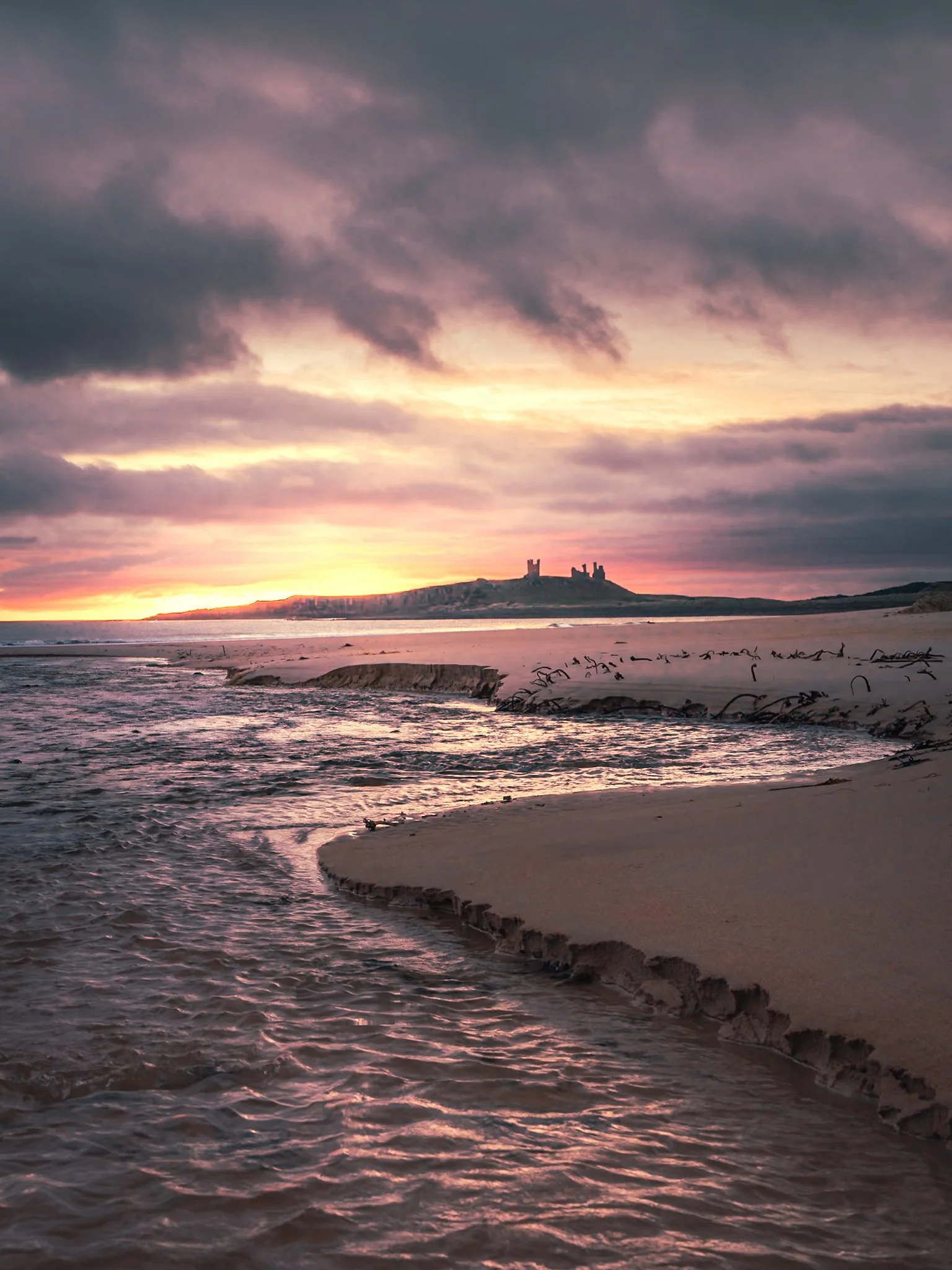
Ten Minutes of Silhouette: Shooting Dunstanburgh from Embleton Bay
There’s a version of Dunstanburgh that only shows itself for about ten minutes a day. The sky hasn’t quite decided if it’s night or morning yet, and the ruin on the headland turns to nothing but shape, no detail, no stone, just a silhouette sitting on the horizon. Miss that window and you’re back to shooting the castle the way everyone shoots the castle. Catch it, and you get something closer to how it must have looked to anyone standing on this beach seven hundred years ago.
Why Embleton, not Craster?
Most people photograph Dunstanburgh from Craster, walking up the coastal path with the harbour behind them. I went the other way, from Embleton Bay, the quieter approach. No road gets you right up to the castle from here either, which is part of the point, you’re still walking, still waiting, still at the mercy of whether the light does what you’re hoping it’ll do. But shooting from the north side gives you the ruin rising above the dunes rather than looming over you, and on a morning with any cloud cover at all, you get colour in the sky instead of a hard, flat sunball.
This shot used a slow shutter, long enough to smooth the incoming waves into something closer to mist than water, while keeping the castle itself sharp and still. It’s a small technical choice, but it’s the difference between a photo of a castle and a photo of a feeling.
A ruin, not a restoration
Dunstanburgh was built in the early 1300s by Thomas, Earl of Lancaster, and it was already falling into disrepair by the time of the Wars of the Roses, fought over and changed hands more than once before being left to the weather. Nobody ever rebuilt it. What’s standing today is genuine decay, seven hundred years of it, which is rarer than you’d think among Northumberland’s castles, most of which were restored, converted, or lived in at some point along the way. Dunstanburgh never was. It’s just been left to slowly lose the argument with the North Sea.
That’s part of why the silhouette works so well. You’re not photographing architecture at that point, you’re photographing the outline of something that’s been quietly disappearing for centuries, and somehow still hasn’t finished.
The practical bit
If you’re planning to shoot this yourself: check the tide, the walk in from Embleton crosses beach and dune, and getting the timing wrong means arriving either too late for the light or with wet feet. And bring more patience than you think you need, that ten-minute window doesn’t announce itself, it just happens, and then it’s gone.
Settings:
47mm
f10
ISO100
1/30s