

What years of photographing Bamburgh Castle have taught me about familiarity, creativity and the value of returning to the same place.
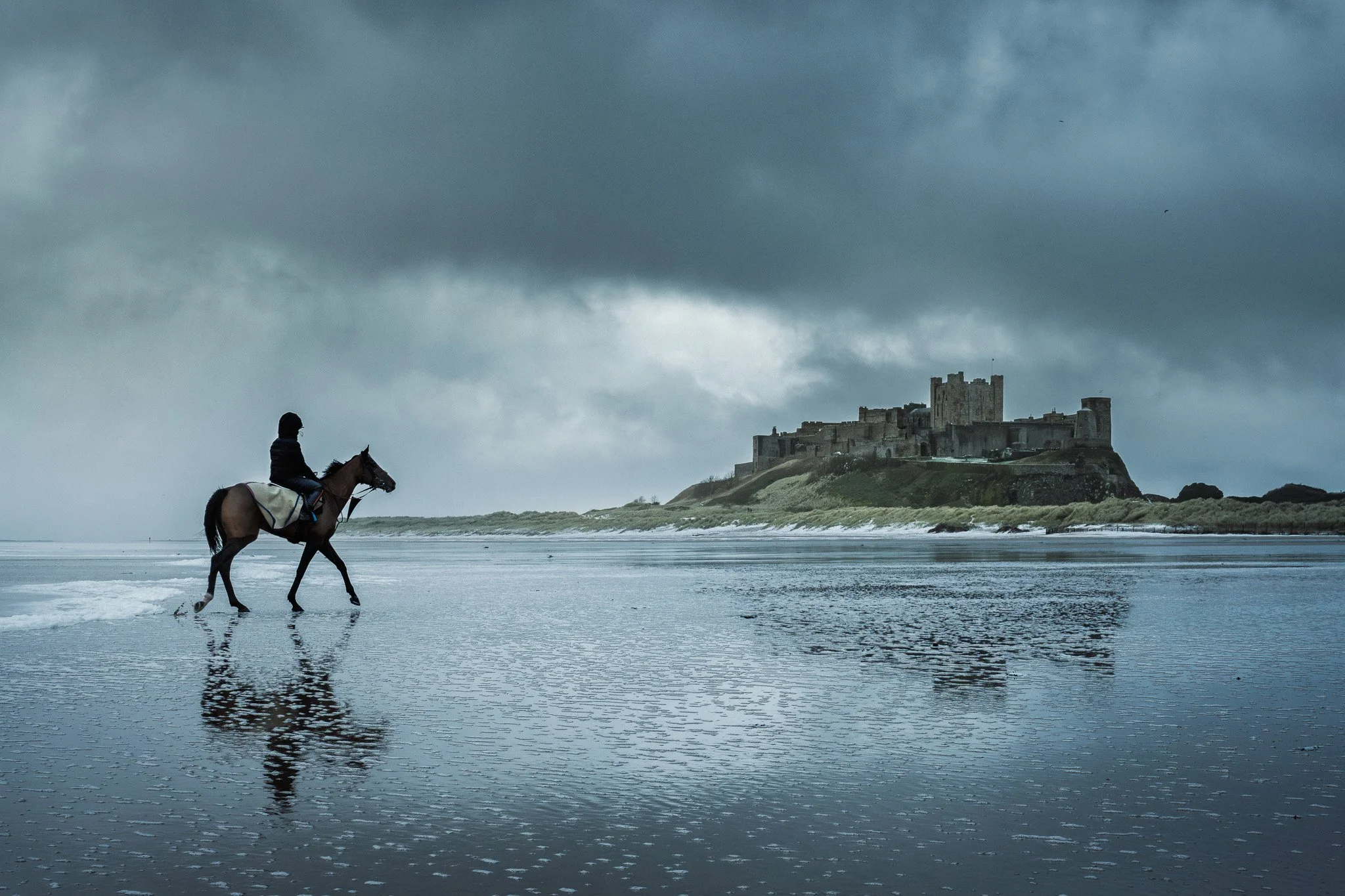
Bamburgh is probably my favourite place in the world to photograph. I've visited countless times, in every season and just about every kind of weather, and I still find something different every time I go.
I've travelled through Yellowstone, photographed the Grand Tetons in Wyoming and visited some extraordinary landscapes around the world. And yet, there is a stretch of coastline in my home county of Northumberland that I never seem to tire of photographing.
It occurs to me that, as photographers, we spend a disproportionate amount of time thinking about where to go next, and perhaps not enough time considering where we've already been.
Where it all began
I came to photography relatively late in life. Having studied graphic design, I'd spent much of my adult life without a meaningful outlet for my creativity. That changed when, in my mid-forties, I bought a Sony A7 III.
The first place I took it was Bamburgh beach.
In the years that followed, Bamburgh became something of a training ground for me. It was where I experimented with filters, different focal lengths, long exposures, composition and editing techniques. As my understanding of photography developed, so too did my understanding of Bamburgh.
Looking back through my archive now, I can see my photographic style evolving through the images I've taken of the castle.
It's almost a visual diary of my development as a photographer.

Eight photographs, one castle
I recently shared a collection of eight photographs of Bamburgh Castle on social media, each taken from a different viewpoint or in different conditions.
In putting the collection together, I was struck by the versatility of a subject I've photographed hundreds of times.
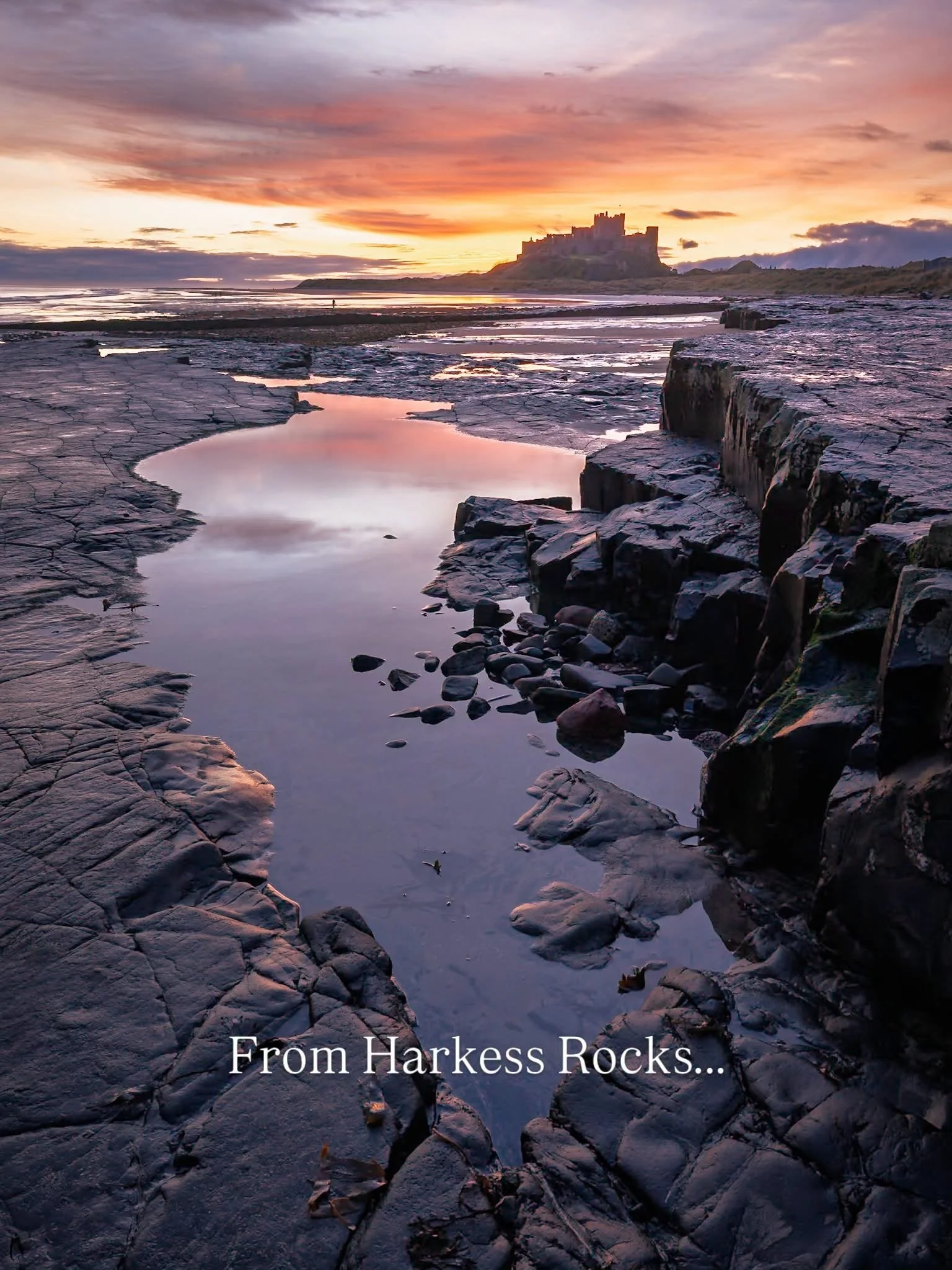
At Harkess Rocks, the textures and shapes of the rocks provide opportunities to lead the eye towards the castle. As the tide retreats, rock pools introduce reflections and open up new compositions.
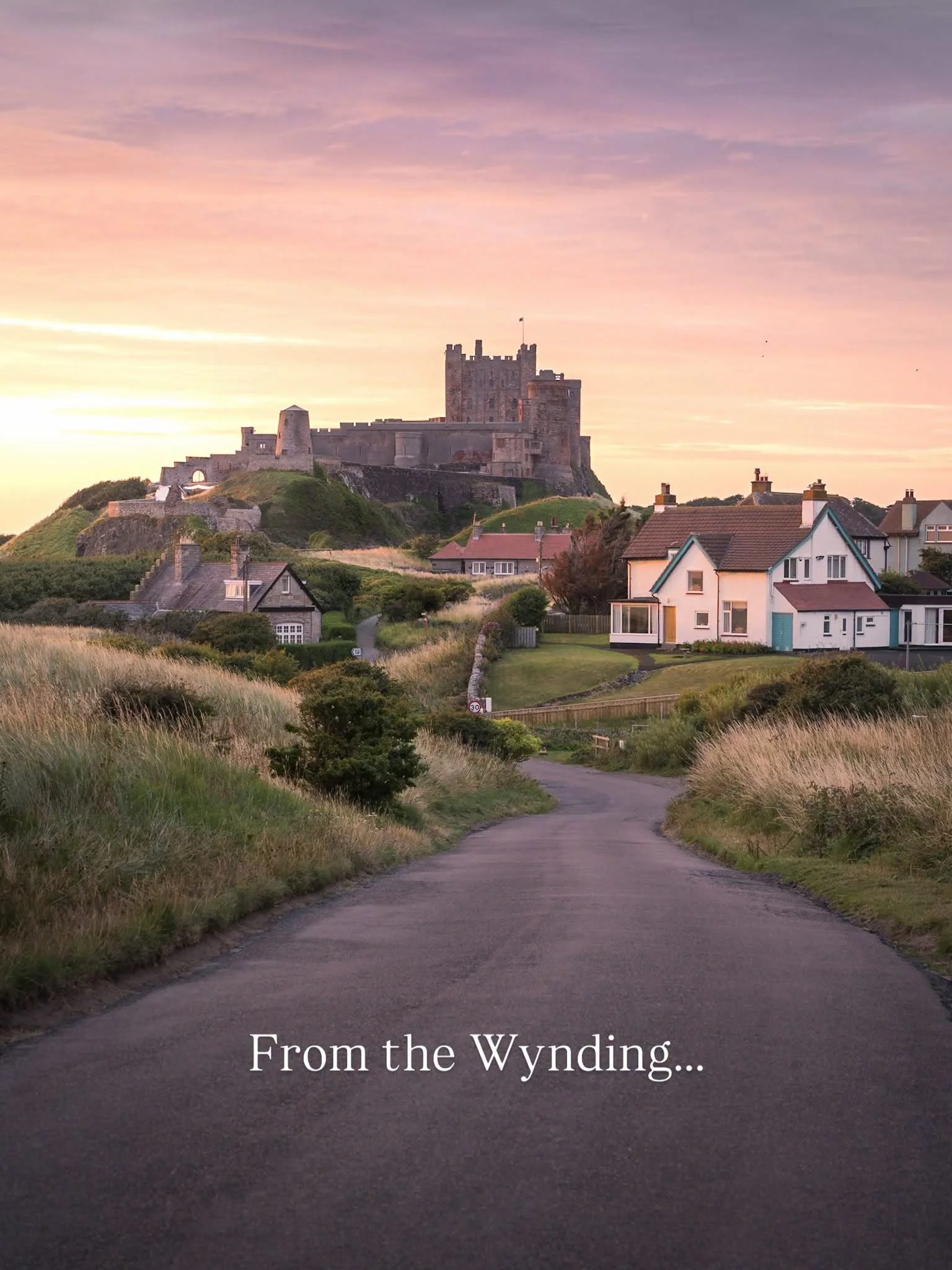
From the Wynding, the road, dunes and village buildings help to tell the story of the castle's relationship with the village that sits beneath it.
From the southern dunes, the long grasses become a feature in their own right, particularly when illuminated by the low, directional light of a setting sun.
In early summer, the reds of the poppies provide an entirely different colour palette to the one I typically associate with the Northumberland coast. In winter, on those rare occasions when snow settles at Bamburgh, even the most familiar compositions take on a different character.
One of the photographs in the collection was taken from some distance away, at a focal length of just 86mm. By stepping back and allowing more of the surrounding landscape into the frame, the photograph gives a greater sense of the castle's scale and geographical context.
The subject remains the same in all of these photographs, but what I choose to emphasise changes considerably.
The creative advantage of familiarity
Social media has given us access to an almost endless supply of photographic inspiration. Barely a week goes by without me adding another location to the list of places I'd like to visit.
But there is something to be said for knowing a location intimately.
I know where the sun rises at Bamburgh at different times of the year. I know which compositions are likely to work at low tide, where to head when there's been snowfall and where I might make the most of the last light of the day.
That knowledge is the product of years of returning, including plenty of mornings when the alarm went off at an unreasonable hour and I came home with very little to show for it.
Familiarity allows me to spend less time thinking about the practicalities of photographing a location and more time thinking creatively.
It also removes some of the pressure. I don't feel obliged to come away with a photograph every time I visit Bamburgh. I can experiment, try an unconventional composition or simply enjoy being there.
There will always be another opportunity.
Photographing more than a castle
As my photography has evolved, I've become increasingly interested in the relationship between history, people and the landscape.
Bamburgh was a centre of Anglo-Saxon royal power centuries before England became a unified kingdom. The great outcrop of the Whin Sill upon which the castle stands helps explain why this particular location was so strategically important.
Understanding that history influences the way I photograph it. The rocks, the coastline and the elevation of the castle are no longer simply compositional elements. They're part of the story.
And increasingly, I find myself looking beyond the castle itself.
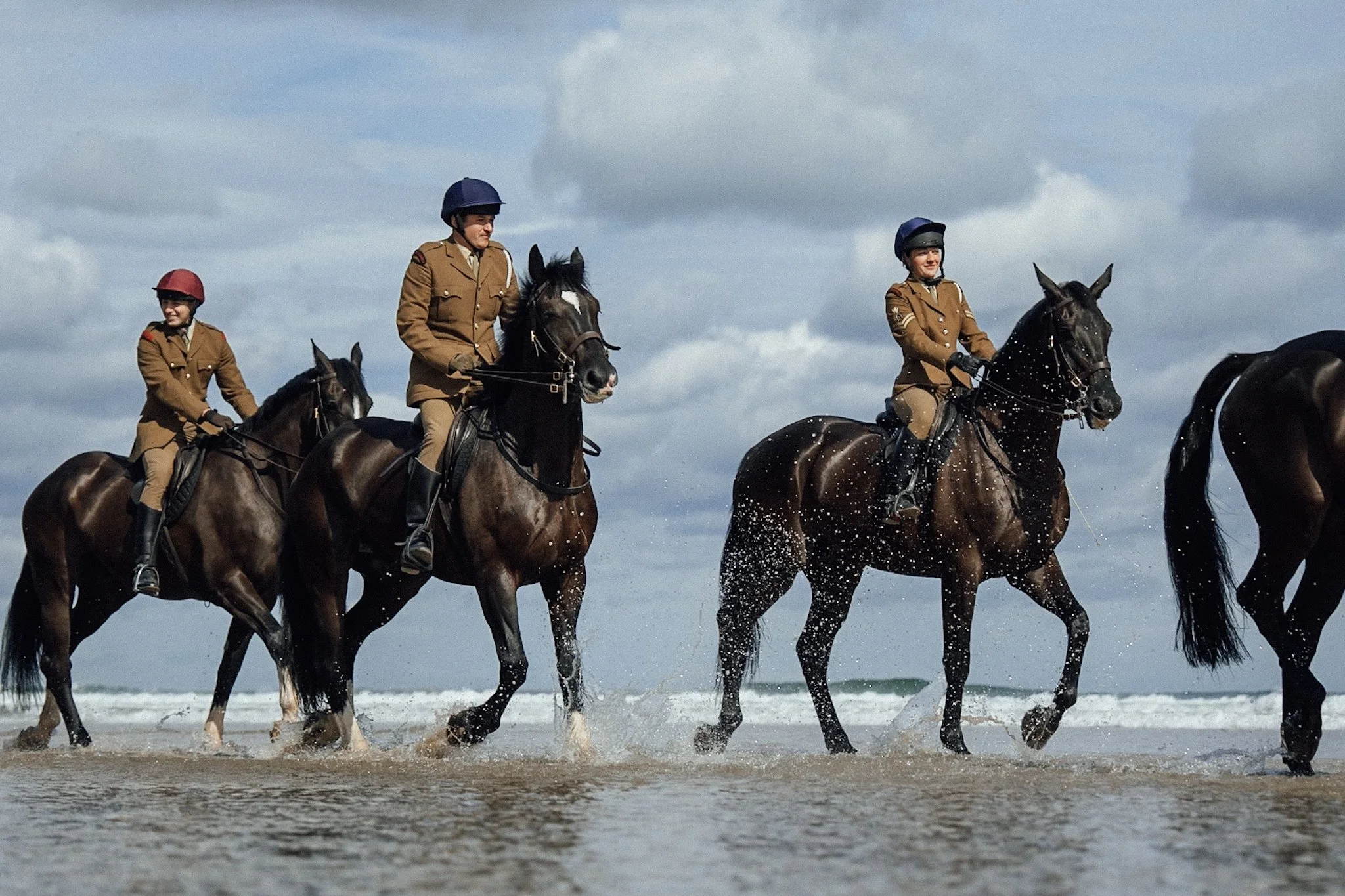
In August 2026, I photographed members of the Household Cavalry riding along Bamburgh beach. Those photographs brought together several of the things that now interest me most as a photographer: people, history, tradition and landscape.
It's a rather different proposition to photographing a sunrise from the dunes, but it's another chapter in my photographic record of Bamburgh.
The place that started a project
It was on a Sunday morning, as I was heading out to photograph Bamburgh yet again, that I began wondering how many other castles there were in Northumberland.
That seemingly innocuous question became the starting point for the Northumberlander Project, my ambition to create the first comprehensive photographic record of all 70 of Northumberland's castles.
The project has taken me to some remarkably remote parts of the county, introduced me to centuries of history I previously knew very little about and given my photography a sense of purpose.
In many respects, it has shaped the photographer I've become.
It's interesting to consider that my most ambitious photographic project began not by visiting somewhere new, but by returning to somewhere familiar.
An unfinished collection
I sometimes wonder how many more photographs of Bamburgh Castle I could possibly take.
And then I see a promising weather forecast, the prospect of snow or the possibility of an interesting sunrise, and I find myself making plans to go again.
I suspect I'll be doing that for many years to come.
If there's a location close to home that you feel you've exhausted photographically, I'd encourage you to go back. Visit in a different season, in poor weather, with a different lens or at a time of day you wouldn't ordinarily consider.
Give yourself permission to see it differently.
Perhaps the next photograph you're really proud of is waiting for you somewhere you've already been.
I certainly haven't finished with Bamburgh.
